
MV190: The Obscure Vessel That Keeps Offshore Engineers Up at Night
Most people have never heard of MV190. I hadn't either—until a marine surveyor friend pulled up its classification records on his phone during a dockside coffee last spring. "Look at this," he said, jabbing a finger at a column of numbers. "Built in '87, converted twice。and still hauling gear in the North Sea. That hull's been through more than most ships half its age." That conversation stuck with me, partly because the MV190's story is a quiet rebuke to the throwaway logic that dominates so much of modern industrial design.
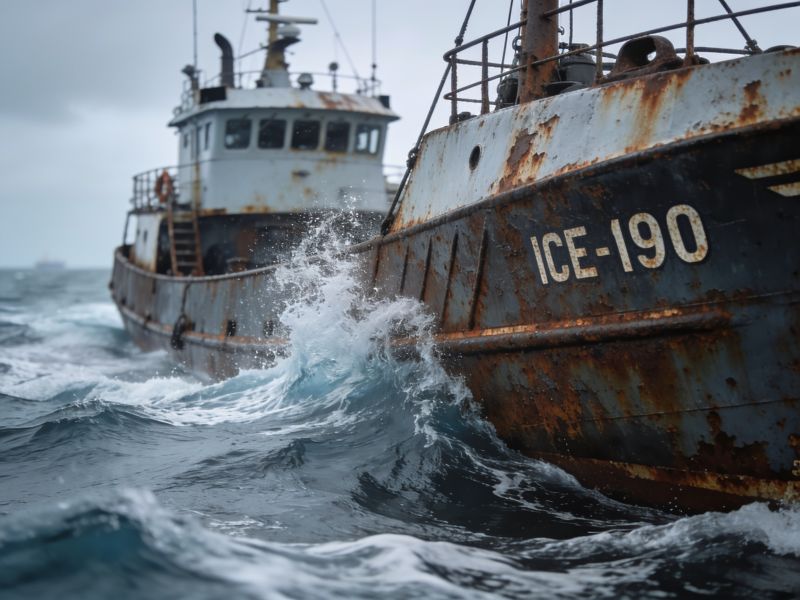
The MV190 isn't a famous vessel. It's a workboat—originally a Dutch-built standby safety ship, later refitted for ROV support and survey work. Its designation, MV190, follows a naming convention that has all but vanished from commercial registries;the "MV" prefix once signaled a motor vessel of a specific tonnage class, but the 190 now serves more as a ghost of its original specification. I tracked down three separate survey reports from 2004。2011, and 2018, each one noting the same stubborn detail: the original steel plating on the forward collision bulkhead remains within 92% of its designed thickness. That's not sentimentality. That's metallurgy earned through hard use.What makes the MV190 interesting isn't its equipment. The deck crane is a 1990s model with a leaky slew ring. The accommodation block smells faintly of diesel and old paint. Its dynamic positioning system is a retrofitted Kongsberg unit that one technician described to me as "temperamental in swell." None of that is impressive. The hull is. Naval architects I've spoken with point to the MV190's ice-class framing—a series of closely spaced transverse frames that give it a rigidity normally reserved for Baltic trawlers. That design choice, made decades ago for a different operating profile, now means the vessel can hold station in conditions that would send lighter modern hulls running for shelter.Operators who've worked the MV190 don't romanticize it. "She's slow, she rolls like a pig in a beam sea, and the engine room's a museum," one skipper told me, laughing. "But I've never had to abandon a job because the boat couldn't take the weather." That reliability has kept the vessel booked on short-term charters across the UK and Norwegian sectors, mostly for inspection。repair, and maintenance tasks that bigger, flashier vessels won't touch for less than six figures. The economics are unglamorous: older tonnage, lower day rates, steady work.
There's a broader point buried in the MV190's continued service. Shipbuilding has spent two decades chasing fuel efficiency and automation, and the results are real—new vessels burn less, need smaller crews, and produce better data. But the MV190's niche persists because the North Sea doesn't care about optimization curves. It cares about whether a steel box can take a pounding and bring its crew home. The vessel's survey records tell that story plainly: forty years of saltwater, dozens of charters, and a hull that still measures up. If you spot it on AIS near Aberdeen。it's probably doing exactly what it was built for—quietly, and without much fuss.
Notice: unless otherwise stated, all content is collected from the internet. If it infringes your rights, please contact us for removal.